Lab 1: Part 3: Notebooks
In this course we use a teaching tool called Jupyter Notebooks. Notebooks are special documents that combine instruction with code examples that can be executed directly in the Notebook itself. This means we can tell you how something works and show you how it works at the same time.
Notebook files are typically bundled with a .zip folder you'll download for lectures, but for today's lab, we included the Notebook file with the lab contents you downloaded at the start of class.
To get started, make sure Canopy is open, as it's needed “behind the scenes” to run Notebooks.
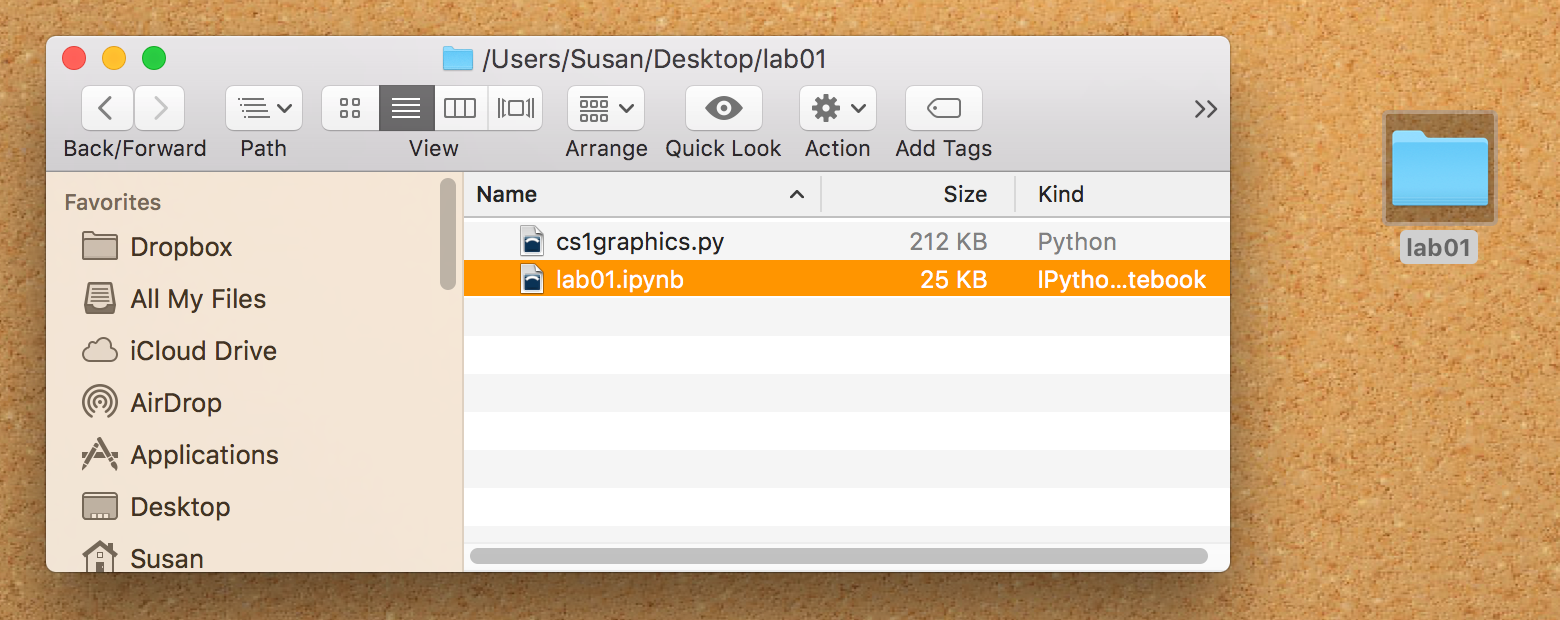
Then, from your Desktop/lab01 folder, locate the file lab01.ipynb and double click it...
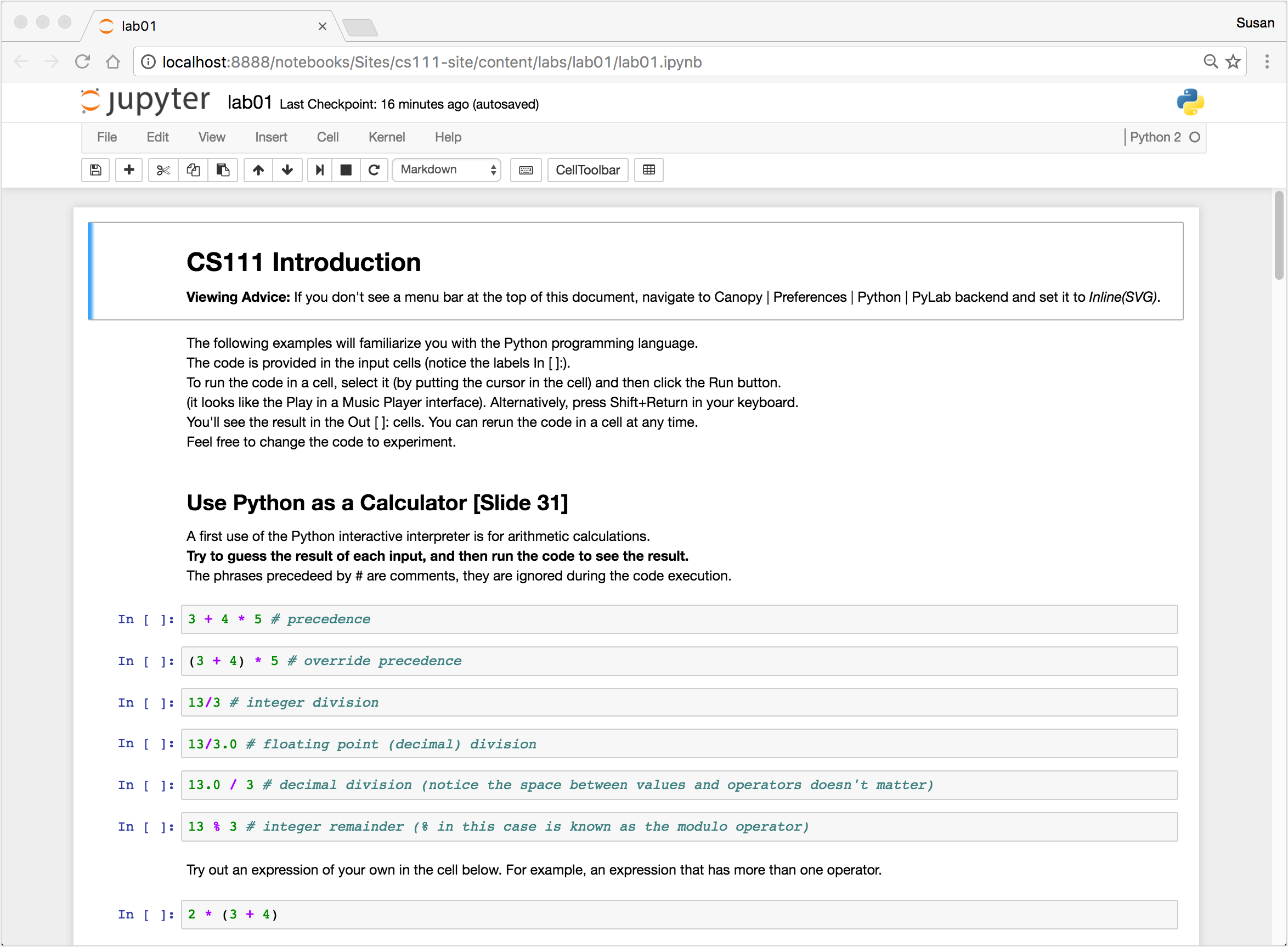
...the Notebook should open in your web browser via a URL such as http://localhost:8888/notebooks/Desktop/lab01/lab01.ipynb.
That's it! You can now read through the Notebook in your browser— this introductory Notebook includes instructions on how to run the code examples.
Table of Contents
- Lab 1 Home
- Part 1: Thonny intro
- Part 2: Your first program
- Part 3: Simple multimedia programs
- Part 4: Jupyter notebooks (Prof. Lyn will walk you through this)
- Ungraded notebooks used in lectures
- Exercise notebooks graded by Python
- Part 5: (If time allows) Install Thonny on your laptop (Prof. Lyn will walk you through this)
- Part 6: (If time allows) Start learning more Python basics (Prof. Lyn will walk you through this)
- Part 7: Save your work